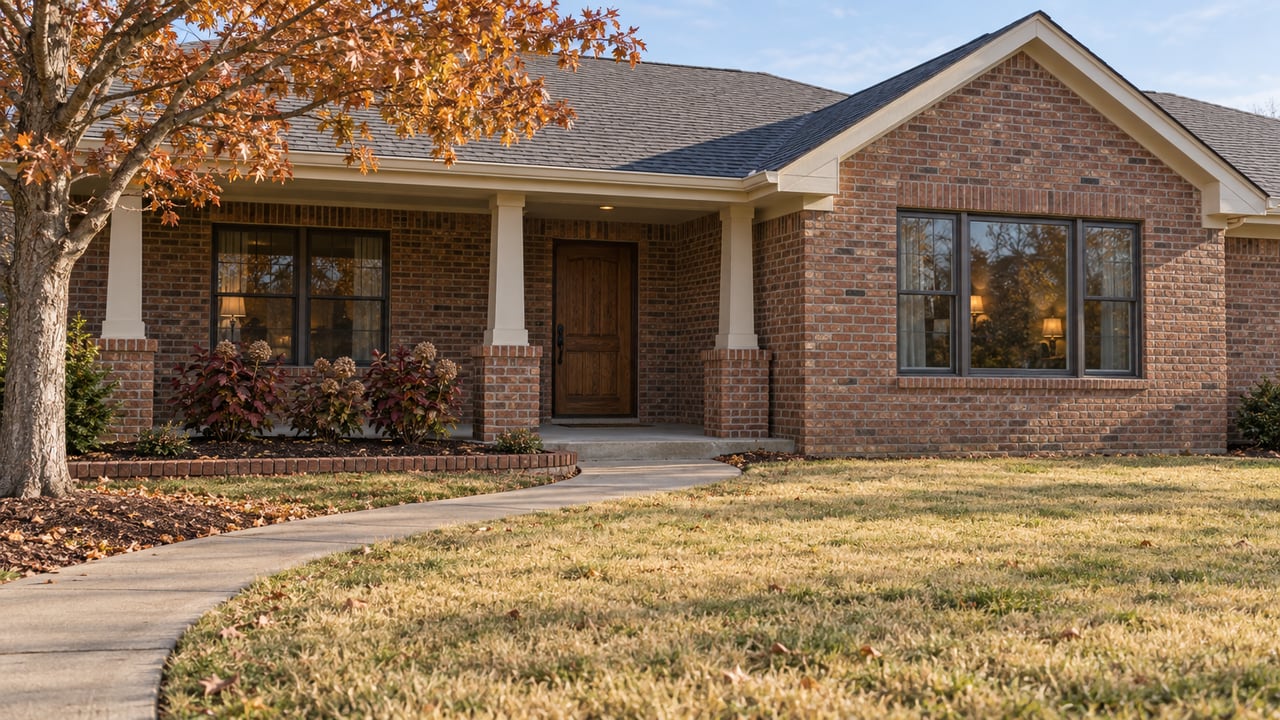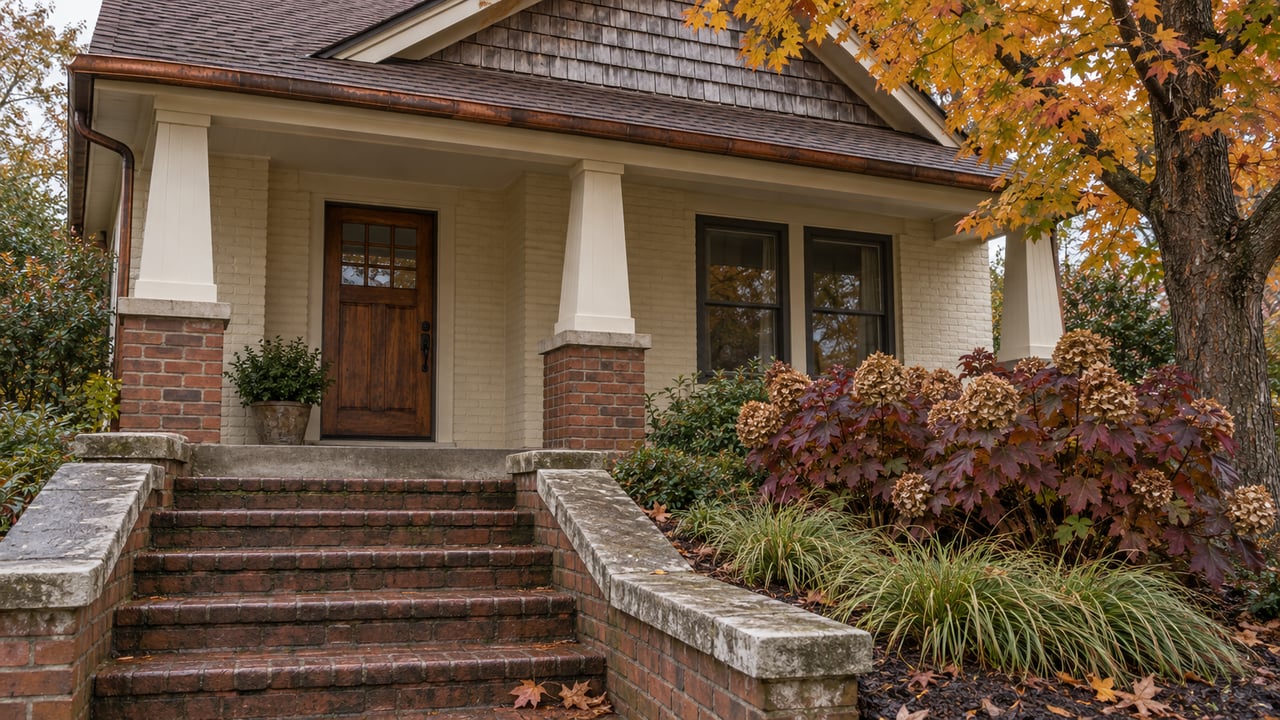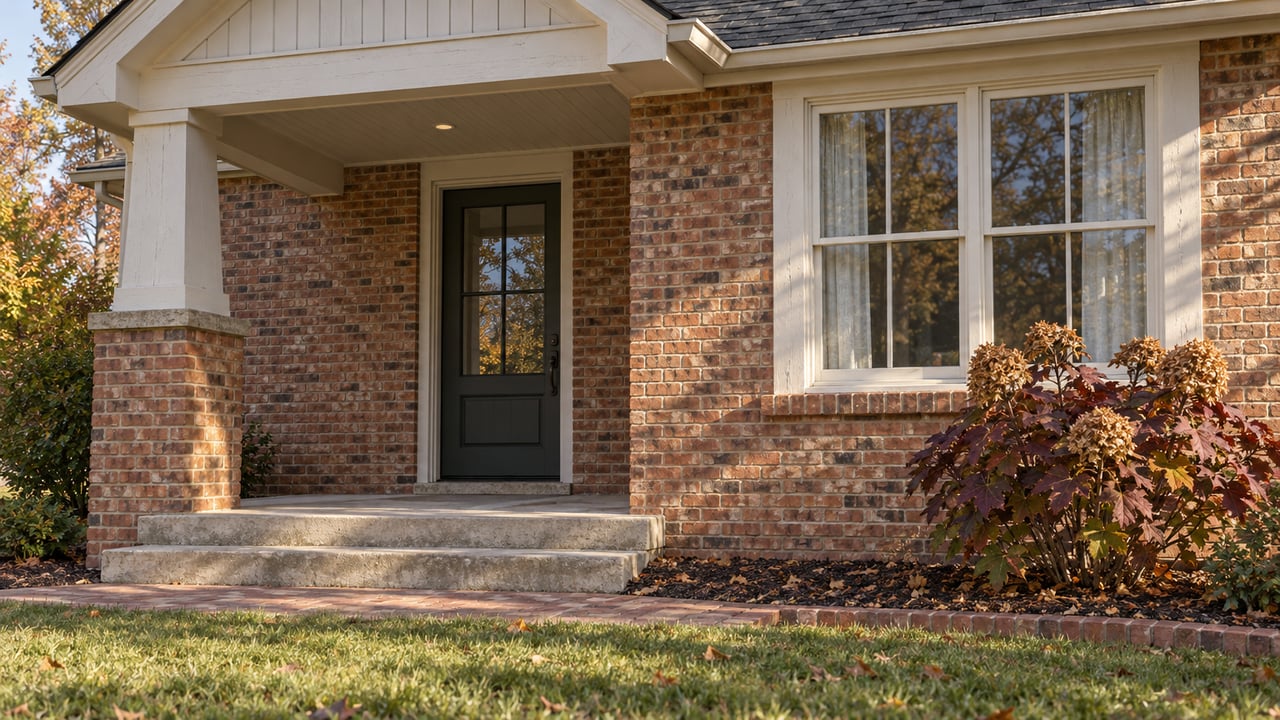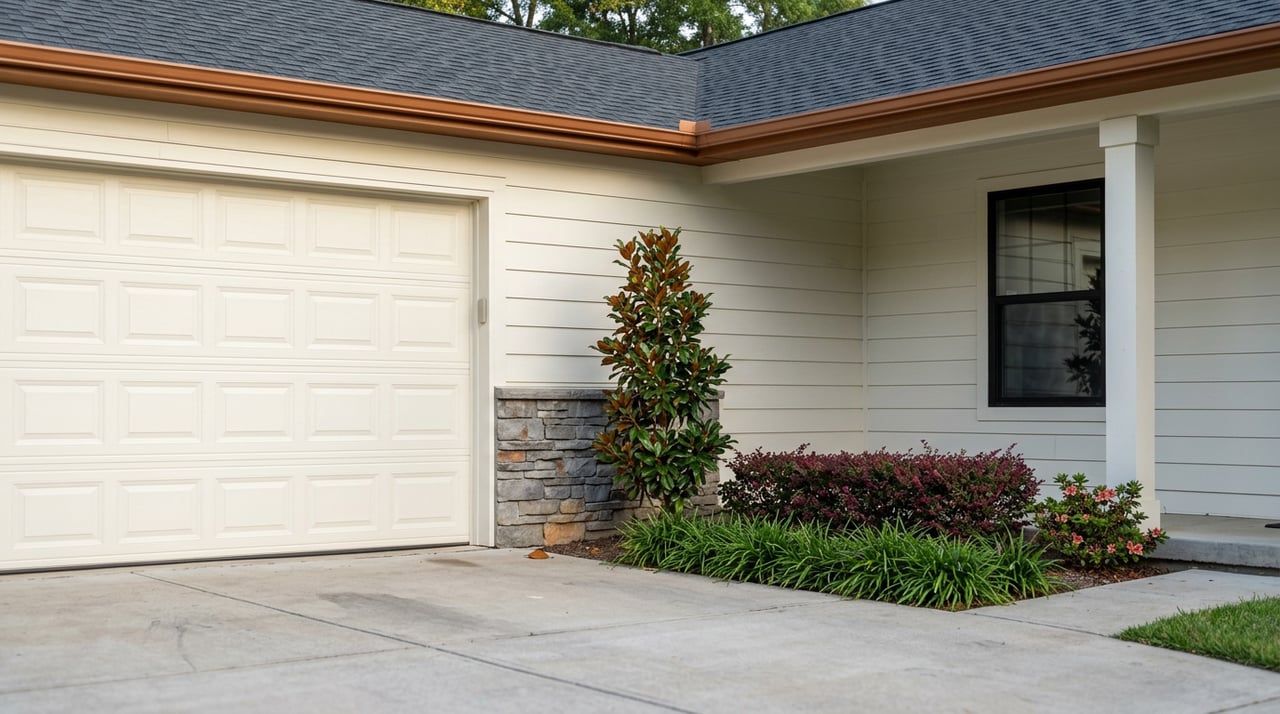
Two buyers can tour new construction in Catoosa County on the same Saturday, in the same price bracket, and walk away with fundamentally different houses. Not different floor plans. Different plumbing.
One buyer tours a home in Pine Lakes, the gated Ringgold community Queen Construction has been building out with Modern Farmhouse designs. The home is on sewer. There's a gated entrance, a quarterly HOA fee, a clubhouse, a pool, and stocked ponds with fountains. The other buyer, twenty minutes away, tours a home in Blackstock Estates: a one-level house on a 1.37-acre lot with no HOA at all. That home is almost certainly on septic. No shared amenities, no monthly dues, and no board approving anything, but also no one else responsible for what happens underground.
Both are "new construction." Both show up under the same search filter. They are not the same product, and the difference between them isn't the builder's taste. It's the sewer line.
The line that decides more than the lot size
Here's the part most buyers never ask about until it's already decided for them: Catoosa County's public sewer capacity is finite, and it's capped by an agreement with a neighboring city. According to the county's own economic development authority, sewer service in the area is provided by the City of Ringgold and the City of Fort Oglethorpe, and the Ringgold system's capacity is capped at 4 million gallons per day by the City of Chattanooga, with the option to double that flow to 8 MGD if the agreement is expanded.
That cap is a real ceiling on how much new development can hook into municipal sewer at all. It's a big part of why builders make different choices lot by lot. A community close enough to city limits, with sewer lines already run, connects to public sewer and prices the HOA into the deal. A subdivision further out, or on land the sewer lines haven't reached, gets built on septic instead, on larger lots, usually with no HOA, because there's no shared infrastructure to maintain.
Water tells a slightly different story. The Catoosa Utility District Authority, a separate entity from the cities, has grown to serve roughly 21,000 residential, commercial, and industrial customers across a 148-square-mile territory that stretches into Walker and Whitfield counties and even a slice of Hamilton County, Tennessee. Having a water district reach your lot doesn't mean sewer follows. Those are two separate infrastructure questions, and new construction buyers routinely assume they travel together.
What that split actually looks like on the ground
Here's how two real Catoosa County new-construction communities compare, based on what's publicly listed for each:
| Pine Lakes (Ringgold) | Blackstock Estates | |
|---|---|---|
| Utility setup | On public sewer | Septic (no public sewer connection listed) |
| HOA | Mandatory, gated, clubhouse and pool | No HOA |
| Typical lot | Standard subdivision lot | 1.37 acres |
| Builder | Queen Construction | Not specified in current listings |
| School zoning | Boynton Elementary, Heritage Middle and High | Varies by exact address |
That HOA fee at Pine Lakes runs $150 a quarter according to current listing records, on top of whatever a buyer pays for water and sewer service itself. That's the ongoing cost of shared infrastructure and amenities. The Blackstock Estates buyer doesn't pay an HOA fee at all, but takes on full private responsibility for a system that has to be pumped, monitored, and eventually replaced on their own dime.
Neither setup is better. They're different financial products wearing the same "new construction" label.
The septic inspection that isn't optional even though it's not required
According to Septic and Well, Georgia doesn't require a mandatory point-of-sale septic inspection anywhere in the state. That's true whether you're buying a 40-year-old farmhouse or a home that was built last spring. But for anyone financing the purchase, that technicality matters less than it sounds. FHA, VA, and most conventional lenders require proof of a functioning septic system before they'll fund the loan, which means the inspection that's legally voluntary becomes practically mandatory the moment a buyer isn't paying cash.
New construction changes the shape of that risk without eliminating it. Georgia's septic regulations are administered by the Department of Public Health, and the rules require every new installation to pass two mandatory inspections: a pre-construction site verification and a final inspection before the system is backfilled. That means a brand-new septic system in Catoosa County has already been checked by the county at least twice before a buyer ever sees it. What a new-construction buyer doesn't get is a pumping history or a track record, because there isn't one yet. The system is unproven in the way any new appliance is unproven. It's just unproven with less paperwork behind it than an older system that's been serviced for a decade.
For a buyer comparing a sewer-connected new build to a septic new build, this is the real tradeoff: the sewer home comes with a monthly bill and an HOA that maintains shared systems. The septic home comes with no bill for wastewater treatment and full ownership of a system that, if it fails, is the homeowner's expense alone, typically running well into five figures for a major repair.
What the current market split hints at
Catoosa County's own price data has an odd wrinkle worth understanding rather than just quoting. One tracker puts the county's median sale price at $336,000 for July 2026, the most recent month on record, up 14.6 percent year over year. A separate tracker, looking at the trailing 30 days heading into mid-August 2026, puts the median closer to $318,000, up 5.6 percent year over year, with 120 new listings and a median time on market of just 16 days. New-construction listings specifically carry a median asking price of $325,000 countywide, sitting almost exactly between those two figures.
Those numbers aren't contradicting each other so much as measuring slightly different slices of the same market. A county where new construction spans both HOA-and-sewer subdivisions and no-HOA septic acreage on much larger lots is a county where the median moves depending on which mix of homes closed in a given window. That volatility is itself the point: in a market this small, the "median" is less useful than knowing which product category a specific listing actually belongs to.
Before you write an offer
A short list worth working through before you commit earnest money on any new-construction lot in Catoosa County:
- Ask directly whether the home is on public sewer or septic. Don't assume based on the neighborhood's amenities.
- If it's septic, ask for the county's final inspection paperwork, not just a builder's word that it passed.
- If there's an HOA, get the current dues amount in writing along with any recent increases, since a quarterly or annual number from a listing sheet can be out of date.
- If you're financing, confirm with your lender early that they'll accept the septic documentation on file, rather than finding out at underwriting.
- Ask who provides water to the specific address. Public water from a district and public sewer from a city are two separate approvals, and one doesn't guarantee the other.
FAQ
Is septic automatically a downside in new construction? Not automatically. A new septic system has passed two county inspections before the buyer ever sees it, and many buyers prefer the larger lots and absence of HOA dues that typically come with septic-served new construction in Catoosa County. It's a different cost structure, not a lesser one.
Does having Catoosa Utility District water mean the home also has public sewer? No. Water and sewer are handled by different providers in Catoosa County. A lot can be on district water and still rely on a private septic system for wastewater.
Can I skip the septic inspection if I'm paying cash? Legally, yes, since Georgia doesn't mandate it statewide. Practically, most buyers still get one, since a functioning system that later fails can cost far more to repair than the inspection would have cost to arrange upfront.
New construction in Catoosa County isn't a single market, and the sewer line running to a lot, or not, is doing more to shape the offer than most buyers realize until they're already under contract. If you're comparing subdivisions and want to know what's actually underneath the one you're considering, Wesley Talley can walk the specifics with you before you write an offer. Let's Connect.
This article is general information, not legal, tax or financial advice. Consult a qualified professional about your situation.